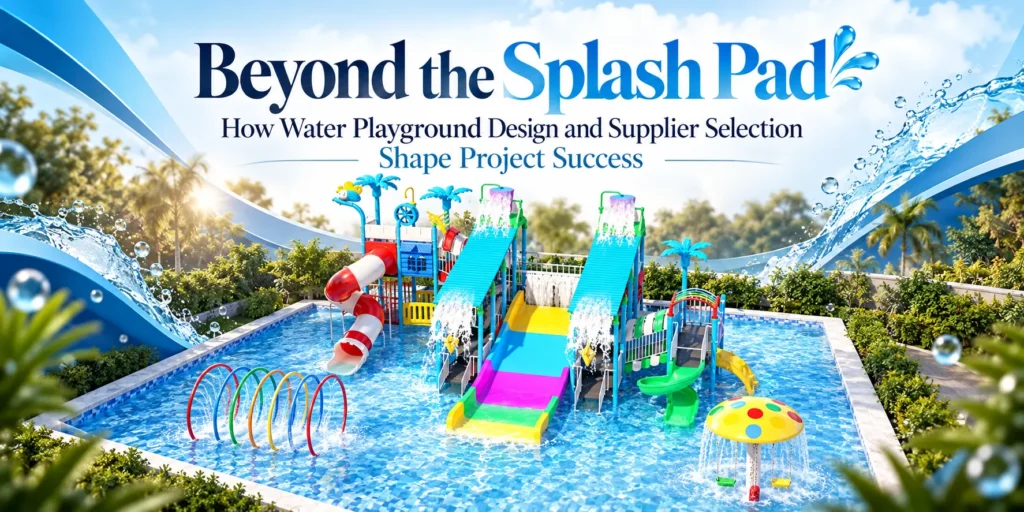
Splash pad or spray park? Buyers comparing quotes often find the same site described in three different ways, with nozzle counts, pump capacity, and drainage buried across separate documents. That makes like-for-like comparison hard.
A water playground is a designed play area where water — recirculated or flow-through — feeds ground nozzles, spray cannons, splash tables, and shallow-pool elements for children’s active play.
This guide breaks the category into formats, project planning steps, and sourcing checks for importers and contractors.
Water Playground Formats: Splash Pads, Spray Parks, and Indoor Water Play Areas
Directory pages and family-fun listings treat splash pads and spraygrounds as separate categories, and the equipment behind each format differs.
- Outdoor splash pads. Zero-depth surfaces fitted with ground nozzles, splash tables, and compact spray cannons. No standing water is held on the deck.
- Spray parks (spraygrounds). Larger layouts that add play structures, taller spray cannons, and sequenced nozzle zones; municipal roundups often list them beside skate parks.
- Indoor water play areas. Enclosed halls mixing shallow-pool elements, water slides, and themed structures, with air handling and drainage sized for year-round use.
Indoor vs. Outdoor Facility Differences
Outdoor sites rely on seasonal demand, sun shading, and surface drainage. Indoor builds trade those for climate control, ventilation, slip-rated decking, and higher structural loads. Map each format to ceiling height, floor space, and the operating calendar before comparing quotes.
Splash Pad vs. Pool-Based Water Play: Comparing Formats for Commercial Projects
A splash pad fits most commercial sites: no standing water, less deck area than a comparable pool, and no lifeguard rota. A pool wins on depth, swim lessons, and heated indoor programming. Compare six criteria before ordering either water playground format.
| Criteria | Splash pad | Pool-based water play |
| Footprint | 50–500 m² deck, no basin | 200 m²+ basin plus plant room |
| Water treatment | Recirculation, filtration, dosing; small volume | Higher turnover, chemical storage, backwash |
| Depth & supervision | Surface film only; visual supervision | 0.3–1.2 m; lifeguards, depth markings |
| Installation | Surface nozzles, pipework, pump pad | Excavation, shell, waterproofing, tiling |
| Season length | 4–6 months; drain-down winterising | 6–12 months if heated indoors |
| Equipment mix | Ground nozzles, spray cannons, splash tables | Slides, inlets, play structures, pumps |
Decision points for importers and contractors:
- Site constraints: soil, drainage, water supply, and pump power.
- Target age: 1–5 and 6–12 groups need different nozzle heights and flow rates.
- Maintenance model: daily skimming versus weekly chemistry checks.
Settle these three before briefing an OEM playground manufacturer.
Water Playground Project Planning: Features, Water Systems, and Footprint Decisions
Before ordering equipment, put eight decisions in writing.
- Footprint and zoning — mark wet and dry areas so visitors move through without crossing spray lines.
- Water supply and drainage — confirm incoming flow rate and where runoff or overflow discharges.
- Recirculation versus flow-through — recirculating systems filter and reuse water; flow-through drains after one pass and needs a bigger supply.
- Spray feature zones — group ground nozzles, spray cannons, splash tables and slides by intensity rather than scattering them.
- Age group separation — keep toddler jets away from taller slides and climbing play structures.
- Shade and decking — splash pad listings tell visitors to bring swimwear, towels and water shoes; provide dry seating and shade.
- Storage and pump room — allocate plant space with clear access for maintenance and chemical handling.
- Phased installation — stage nozzles and slides so the site can open in stages.
Written decisions like these speed later checks with a custom playground manufacturer.
Sourcing Water Playground Equipment: OEM/ODM and Factory Evidence for Importers
Before comparing prices on a water playground system, verify the supplier as a factory rather than a trading desk. Send every candidate the same evidence list, so replies stay comparable.
- OEM/ODM scope: which components are tooled in-house — ground nozzles, spray cannons, splash tables, control cabinets — and which are outsourced?
- Playground production line: dated photos or video of moulding, assembly and leak or pressure testing.
- Playground equipment factory audit: match licence scope, workshop size and QC records to the components you will receive.
- One-stop supply: confirm who provides pumps, filtration, valves and controllers, and whether spare nozzles ship with the first container.
- Export packaging and documents: crate dimensions, fumigation-free packing, test reports and a sample packing list.
- Samples and references: ask for a sample spray feature and project lists showing site type, feature count and installation year.
- Engineering support: site plans, hydraulic layout and flow/pressure schedules for pump selection.
Score each reply against the same list before shortlisting suppliers.
About JQ Playground – wenzhouplaygroundmanufacturer.com
JQ Playground (Wenzhou Jiqi Amusement Equipment Co., Ltd.) is a children’s playground equipment manufacturer founded in 1993. The company provides design, customization, large-scale manufacturing, sales, installation guidance, and after-sales support for outdoor playgrounds, indoor playgrounds, soft play, water playgrounds, PE board playgrounds, kindergarten furniture, outdoor fitness equipment, pet playgrounds, and playground facilities. Approved company facts include 180+ employees, a large Wenzhou production base, 20+ production lines, 55 production machines, ISO/BSCI/EN1176/EN71/ASTM/CPC/CPSIC certification references, 100+ patents, free design support, OEM/ODM capability, trial installation before shipping, export experience, and one-year quality warranty.